
Opioid Addiction
The detrimental impact of opioid addiction spans countless lives across the US, wreaking havoc for both the afflicted and their loved ones. At South Coast, our treatment services empower people to overcome opioid addiction.
Opioids are known for their potent pain-relieving properties but also carry a high risk of addiction. Opioid addiction not only wreaks havoc on an individual’s physical and mental health but also tears apart families, strains healthcare systems, and burdens societies with an alarming overdose death toll.
Drug use, including the misuse of opioids and other substances, can lead to serious health complications such as infectious diseases, organ damage, and increased risk of overdose. Beyond individual health, widespread drug use contributes to societal challenges like increased healthcare costs, crime, and loss of productivity.

What Is Opioid Addiction?
Opioid addiction, also known as opioid use disorder (OUD), is a complex condition characterized by compulsive drug-seeking and use despite harmful consequences. Addiction can happen to anyone, regardless of age, gender, or socioeconomic status. Opioid abuse often begins with voluntary misuse of prescription opioids. The longer a person abuses opioids, the more they build up their tolerance to it. Regular opioid use of codeine can build a tolerance to the medication. This means the person requires a higher dose of opioids to experience the same effect.
Over time, Addiction to opioids can result in physical and psychological dependency. After developing a psychological and physical dependence on opioids, people experience all-consuming cravings that can override their logic and disrupt all aspects of their lives. For instance, those who misuse prescription opioids end up running out of their medication at a faster rate. This often leads people to seek out illicit opioids, such as heroin.
People with an addiction to opioids may have flu-like symptoms (signs of withdrawal) when attempting to stop. Opioid pain relievers are marketed as safe, and this may be the case depending on the person’s abuse history and if taken as prescribed for a short period of time. However, long-term opioid use causes changes in the brain and withdrawal can occur with the sudden stop of use. Repeated intake and exposure of opioid drugs result in dependence and prolonged use leads to chronic changes in the brain that constitute a full-fledged addiction.
What Is An Opioid?
Opioids act on the brain and nervous system, producing feelings of euphoria by binding to pain receptors. Prescription opioids are prescribed by a physician to treat pain or injuries. Common prescription opioids are oxycodone, hydrocodone, and fentanyl. All prescription opioid medications are considered controlled substances under the Controlled Substances Act (CSA).
To safely monitor and distribute medications that pose a potential risk of addiction, the Drug Enforcement Administration (DEA) divides controlled substances into one of five schedules—Schedule I controlled substances have the highest potential for abuse/dependency and serve no medical purpose whereas Schedule V substances have the lowest potential for abuse/dependency and serve an accepted medical purpose. Due to their high potential for abuse and risk of physical dependence, most opioids of abuse are Schedule I or II controlled substances.
Illicit opioids, such as heroin and illegally manufactured fentanyl, are highly addictive and can have serious, potentially fatal health consequences. These opioids are made and sold illegally as recreational street drugs.
Opiate vs Opioid
The terms “opiate” and “opioid” are often used in the same way, but they have distinct differences. Opiates refer to natural substances derived from the opium poppy plant, like morphine and codeine. On the other hand, “opioid” encompasses a broader category, including natural opiates, synthetic compounds, and semi-synthetic substances like oxycodone and hydrocodone.
Opioid abuse often begins when individuals are exposed to these substances, often through legitimate medical prescriptions for pain management. Many don’t perceive them as harmful because they come from a doctor. However, as tolerance develops, people may increase their dosage, leading to physical dependence and addiction. Factors such as genetic predisposition, psychological vulnerability, and environmental influences also contribute to the addiction’s complexity.
Opioid Addictions We Treat
Treating opioid addiction is essential due to the numerous health, social, and legal risks it poses. At South Coast Behavioral Health, we are dedicated to addressing the diverse spectrum of opioid addictions, offering individualized care to each of our guests. Our comprehensive programs address the unique challenges of each substance and provide individuals with the tools and support needed to achieve lasting sobriety and improved overall well-being.
Some of the opioid addictions we treat at our rehab centers include:
- Hydrocodone Addiction
- Oxycodone Addiction
- Hydromorphone Addiction
These opioid addictions can have severe physical, mental, and social consequences. At South Coast Behavioral Health, our tailored treatment approaches and experienced professionals are dedicated to helping individuals overcome addiction and achieve lasting recovery. We address each case, providing research-based therapies, medical support, and holistic care to foster healing and well.
Many individuals with opioid addiction may also struggle with drug alcohol dependency, which can complicate treatment and recovery due to the risks and challenges of polysubstance abuse.
Fentanyl is a potent synthetic opioid, between 50-100 times stronger than morphine. Its high potency makes it a prime candidate for misuse and addiction, and it poses a severe risk of overdose.
Heroin, an illegal opioid derived from morphine, is very addictive. Individuals often turn to heroin when they can no longer obtain prescription opioids, contributing to a significant portion of prescription drug abuse cases.
Codeine is a less potent opioid found in prescription medications, often used for pain and cough relief. However, misuse and dependence on codeine can develop, leading to addiction.
Hydrocodone is a semi-synthetic opioid often prescribed for pain management. Its addictive potential has led to a rise in hydrocodone addiction cases.
Oxycodone Addiction
Oxycodone, commonly sold as OxyContin and Percocet, is a semi-synthetic opioid that treats moderate to severe pain. Misuse of oxycodone poses a high risk for addiction and dependence.
Hydromorphone, also known as Dilaudid, is a powerful opioid that treats severe pain. Due to its high potency, misuse of hydromorphone can lead to dependence and addiction.
As with any drug, it is important to be aware of the dangers of opioids and seek help if needed. South Coast provides addiction treatment services for individuals struggling with drug addiction as well as their families. We are committed to helping our guests regain control of their lives, and we can provide a personalized plan that takes into account all aspects of opioid addiction recovery.
Opioid Addictions Facts and Stats
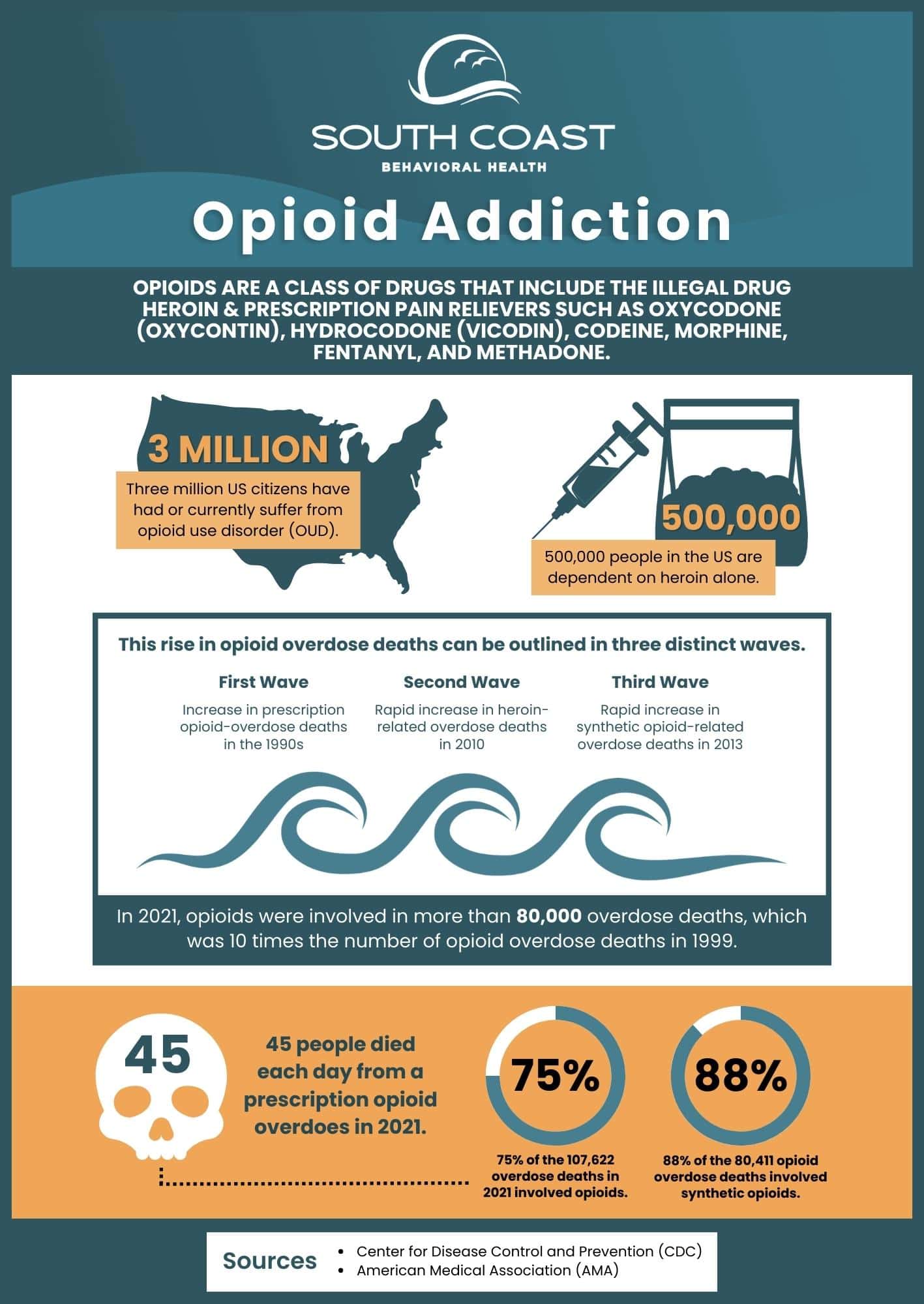
Since the first wave of the opioid crisis began in the 1990s, overdose deaths involving prescription opioids, heroin, and most recently fentanyl have surged throughout the United States and the world at large. Understanding the intricacies of addiction to opioids and its far-reaching impact is crucial in addressing this pressing global health issue.
Here are some statistics and facts about opioid abuse:
- Overdose Epidemic: In the United States, opioid overdoses accounted for around 69,710 deaths in 2020, making it the leading cause of drug overdose fatalities. (Source: CDC)
- Prescription Opioid Misuse: A significant portion of opioid misuse begins with prescription medications. In the U.S., an estimated 11.4 million people aged 12 or older misused prescription opioids in 2020. (Source: SAMHSA)
- Global Impact of Opioids: The opioid crisis is not limited to the United States; it's a global issue. The United Nations reports that in 2019, around 53 million people worldwide had used opioids in the form of prescription pain relievers or illicit drugs, contributing to various health and societal challenges.
The impact of opioid addiction and the effectiveness of opioid addiction treatment can vary depending on factors such as the type of opioid used, duration of use, and individual guest needs.
Understanding the severe nature of the opioid crisis highlights the necessity of comprehensive opioid addiction treatment and support. Recovery from opioid addiction is possible with the right resources and commitment, offering a chance to regain control of your life.
Symptoms of Opioid Addiction
Opioid addiction can affect nearly every area of a person’s life, including physical health, emotional well-being, relationships, work, and daily functioning. While the signs are not always obvious at first, opioid use disorder often becomes more noticeable over time as use becomes harder to control and the consequences begin to grow. Recognizing the symptoms of opioid addiction early can help individuals and families seek support before the problem becomes even more severe.
It is especially important to recognize opioid withdrawal symptoms early, as these can be a key indicator of developing dependence and signal changes in the brain’s neurobiology, particularly involving the locus coeruleus and its noradrenergic activity.
At South Coast Behavioral Health, treatment begins with understanding the full impact addiction is having on a person’s life. Because opioid addiction can involve both physical dependence and compulsive substance use, the symptoms may appear in several different ways.
Physical Symptoms of Opioid Addiction
One of the most common signs of opioid addiction is a growing physical dependence on the drug. A person may need to use more opioids over time to feel the same effects, or they may begin to feel sick when they try to cut back or stop. Physical symptoms can include drowsiness, slowed breathing, pinpoint pupils, frequent flu-like symptoms, nausea, constipation, and noticeable changes in sleep or appetite.
Some individuals may also appear sedated, nod off unexpectedly, or seem unusually fatigued throughout the day. Over time, ongoing opioid misuse can take a serious toll on overall health and physical functioning.
Behavioral Signs of Opioid Addiction
Behavioral changes are often some of the clearest signs that opioid use has become a deeper problem. A person may begin spending a significant amount of time obtaining, using, or recovering from opioids. They may neglect responsibilities at home, school, or work, lose interest in activities they once enjoyed, or continue using opioids even when it causes obvious harm.
Other behavioral symptoms may include doctor shopping, taking medication in a way other than prescribed, isolating from loved ones, becoming secretive, or having financial or legal problems related to substance use. Repeated unsuccessful attempts to stop using can also be a strong sign of addiction.
Emotional and Psychological Symptoms
Opioid addiction can also affect mood, thinking, and emotional stability. A person may seem more anxious, depressed, irritable, or emotionally withdrawn. Some individuals experience mood swings or become increasingly focused on opioids to the point that other priorities fade into the background.
Cravings are another major symptom of opioid addiction. These intense urges to use can make it extremely difficult to quit without treatment, especially when stress, discomfort, or withdrawal symptoms are involved.
The Consequences of Opioid Addiction
Addiction to opioids is accompanied by a wide range of consequences, affecting not only the individual struggling with addiction but also their loved ones and communities. Some of the significant consequences of opioid addiction include:
- Health Problems: Opioid abuse can lead to a plethora of health issues, including respiratory depression, constipation, and a weakened immune system. Chronic opioid use can result in long-term health complications such as heart problems, liver damage, and infectious diseases like HIV/AIDS from shared needles. days to a couple of weeks. This phase focuses on managing the acute withdrawal symptoms, which can include depression, fatigue, and intense cravings.
- Overdosing: Opioid overdose is a grave and immediate risk associated with addiction. Individuals may develop tolerance, requiring larger doses to achieve the desired effect, which increases the chances of a fatal overdose.
- Relationship Problems: Opioid addiction often strains relationships with family, friends, and partners. Trust is eroded, and communication breaks down, leading to conflict and isolation.
- Work and Academic Performance: Maintaining employment or academic commitments becomes challenging as addiction progresses. Absenteeism, decreased productivity, and impaired cognitive functioning can result in job loss or academic underachievement.
- Financial Consequences: The cost of obtaining opioids, whether through prescriptions or the illicit market, can be crippling from a financial standpoint. Individuals may resort to illegal activities to fund their addiction, leading to legal issues and further financial strain. nt or academic commitments becomes challenging as addiction progresses. Absenteeism, decreased productivity, and impaired cognitive functioning can result in job loss or academic underachievement.
- Legal Issues: Opioid addiction can lead to legal problems, including arrests and criminal charges related to drug possession, theft, or driving under the influence.
- Social Isolation: As addiction takes hold, individuals often withdraw from social activities and responsibilities, becoming more and more isolated from their support networks.
- Mental Health Complications: Addiction to opioids can exacerbate or co-occur with mental health disorders, compounding emotional distress and complicating treatment.
Recognizing these consequences is essential in understanding the urgency of addressing opioid addiction. Effective treatment and support can help individuals regain control of their lives, improve their health, and rebuild relationships and livelihood.
Wondering if Your Insurance Covers the Cost of Opioid Addiction Rehab?
The Relationship Between Opioid Addiction
and Mental Health
The relationship between opioid addiction and mental health is complex and often intertwined. Individuals with preexisting mental health disorders are at a higher risk of developing substance use disorders, including opioid abuse. Those who become addicted to opioids may experience worsening mental health as a consequence of their addiction.
Dual diagnosis, also known as co-occurring disorders, refers to the simultaneous presence of both a substance use disorder and a mental health disorder. These conditions often exacerbate each other, creating a cycle of self-medication and worsening symptoms.
Here are some key stats and facts about co-occurring disorders:
- According to the Substance Abuse and Mental Health Services Administration (SAMHSA), around 9.5 million adults in the United States experienced both a mental illness and a substance use disorder in 2020.
- The National Institute of Drug Abuse (NIDA) states that co-occurring disorders can complicate treatment and recovery, and addressing one disorder without considering the other may be less effective.
- Common mental health disorders seen in co-occurring cases include depression, anxiety disorders, post-traumatic stress disorder (PTSD), and bipolar disorder.
- Effective treatment for co-occurring disorders often involves integrated approaches that address both the addiction and mental health aspects, promoting better overall outcomes.
Understanding and addressing the link between opioid addiction and mental health is crucial for providing comprehensive and effective care to individuals struggling with these complex conditions. By incorporating dual diagnosis treatment services into opioid addiction rehab programs, individuals can receive the integrated and comprehensive care they need to make lasting changes in their lives.
When Do You Need Opioid Addiction Treatment?
You should consider seeking opioid addiction treatment when you notice signs of an opioid use disorder (OUD) impacting your life.
Some signs of opioid addiction include:
- Loss of Control: Inability to cut down or control opioid use, despite wanting to do so.
- Cravings: Strong, persistent urges to use opioids.
- Health Issues: Experiencing health problems related to opioid use, such as overdose, infections, or chronic pain.
- Relationship Strain: OUD can strain relationships with loved ones, leading to conflicts and isolation.
- Legal Issues: Involvement in legal problems related to opioid possession or use.
- Work or Academic Decline: A decline in work or academic performance due to opioid use.
- Withdrawal Symptoms: Experiencing withdrawal symptoms when not using opioids.
If you or someone you know exhibits these signs or experiences serious problems due to opioid addiction, it’s crucial to seek professional help. Early intervention and treatment can improve the chances of recovery and prevent further harm.
At SCBH, we are dedicated to providing specialized treatment to people suffering from opioid addiction and mental health disorders. Our team of experienced clinicians and healthcare professionals provides compassionate and individualized care to ensure our guests have the best possible chance for recovery.
Opioid Addiction Treatment Options
Opioid addiction is treated through a combination of approaches to address the physical, psychological, and social aspects of recovery. Here’s an overview of what opioid treatment entails:

Opioid addiction treatment begins with a thorough assessment by a healthcare professional to determine the severity of the addiction and identify any co-occurring mental health disorders. This assessment guides the development of a guest’s individualized treatment plan.
To begin recovering from opioid dependence, medical detoxification incorporates supervised withdrawal in a safe environment. Depending on the guest’s specific circumstance, medical professionals can provide medication to manage withdrawal symptoms and ensure the individual’s safety.
Inpatient programs for opioid abuse help people in various stages of addiction. Inpatient care incorporates 24/7 supervision, individualized treatment plans, medication management, research-based therapies, addiction education, peer-led support groups, and holistic treatments. With these programs, guests are able to identify the cause of their addiction and develop healthier coping skills in order to sustain long-term recovery.
Medication-assisted treatment (MAT) for opioid use disorders involves the use of medications like methadone, buprenorphine, or naltrexone. MAT medication assists in the management of cravings and withdrawal symptoms, allowing individuals to focus on recovery.
Dual-diagnosis treatment services address the symptoms of addiction and any co-occurring mental health disorders. Treatment for co-occurring disorders often involves a combination of medication management and psychotherapy.
research-based therapies like cognitive-behavioral therapy (CBT), contingency management, and motivational interviewing (MI) help individuals identify and change addictive behaviors, develop coping strategies, and address underlying issues.
Holistic approaches incorporate various complementary therapies like yoga, mindfulness, art therapy, and acupuncture to promote overall well-being and address mental, emotional, and spiritual aspects of recovery.
Group therapy, recovery meetings, and 12-step programs like Narcotics Anonymous provide peer support and a sense of community, reinforcing recovery efforts.
Tailoring treatment to the individual’s unique circumstances is crucial for successful recovery from opioid addiction. A comprehensive approach that combines medication (if needed), therapy, and holistic support offers the best chances for sustained sobriety and improved quality of life.
Medical Detox for Opioid Addiction
Medical detox for opioid addiction is often the first step toward recovery for individuals who have developed a physical dependence on prescription painkillers, heroin, or synthetic opioids. When opioid use is reduced or stopped, the body can react with a range of withdrawal symptoms that are deeply uncomfortable and emotionally distressing. While opioid withdrawal is not usually life-threatening in the same way that alcohol or benzodiazepine withdrawal can be, it can still be intense enough to make quitting without professional help feel overwhelming.
At South Coast Behavioral Health, medical detox for opioid addiction is designed to help guests begin recovery in a safe, supportive, and medically supervised setting. With clinical oversight, individualized care, and medication support when appropriate, guests can move through withdrawal with greater comfort and stability while preparing for the next phase of treatment.
What is Opioid Detox?
Opioid detox is the process of allowing opioids to clear from the body while managing the physical and psychological symptoms of withdrawal. These symptoms can begin within hours after the last use, depending on the type of opioid involved. Common withdrawal symptoms may include muscle aches, sweating, nausea, vomiting, diarrhea, anxiety, restlessness, insomnia, and intense cravings.
Because withdrawal can be so uncomfortable, many people return to opioid use simply to stop the symptoms. Medical detox helps reduce that risk by providing supervision, symptom management, and a structured environment that supports early recovery.
Why Medical Detox Matters
Attempting to detox from opioids alone can be physically exhausting and emotionally difficult. In some cases, dehydration, severe discomfort, and cravings can quickly lead to relapse. A medical detox program offers monitoring, support, and evidence-based interventions that can help guests remain safer and more comfortable throughout the process.
This level of care can be especially important for people who have been using opioids heavily, have relapsed before, or are also living with anxiety, depression, trauma, or other co-occurring mental health concerns. A professionally supervised detox setting allows the treatment team to respond to symptoms as they change and help guests begin recovery with a stronger foundation.
What to Expect During Opioid Detox
The detox experience is different for everyone. Factors such as the type of opioid used, frequency of use, overall health, and history of substance use can all affect the timeline and severity of withdrawal. Treatment typically begins with an assessment so the care team can understand the guest’s needs and create an individualized plan.
During detox, guests may receive ongoing observation, supportive care, and medications when clinically appropriate to help manage symptoms and reduce discomfort. Just as important, they receive encouragement and guidance during one of the most challenging early stages of recovery.
Detox Is Only the Beginning
Although detox is an essential step, it is not a complete treatment for opioid addiction on its own. Detox helps the body stabilize, but long-term recovery usually requires continued care that addresses the emotional, behavioral, and psychological aspects of addiction. After detox, many guests benefit from continuing treatment through residential care, partial hospitalization, intensive outpatient programming, therapy, and relapse prevention planning.
Opioid Withdrawal Timeline
Opioid withdrawal can begin within hours after a person reduces or stops opioid use, but the exact timeline depends on the type of opioid involved. In general, withdrawal from short-acting opioids such as heroin or oxycodone tends to begin sooner and resolve faster, while withdrawal from longer-acting opioids such as methadone may last longer. Although opioid withdrawal is usually not fatal, it can be extremely uncomfortable, can lead to dangerous dehydration, and often increases the risk of relapse without professional support.
6 to 12 Hours After the Last Use
For many people using short-acting opioids, early withdrawal symptoms can begin during this stage. These symptoms often feel similar to the flu and may include anxiety, muscle aches, sweating, chills, restlessness, tearing, runny nose, and trouble sleeping. Cravings may also begin to intensify early in the process.
12 to 24 Hours
As withdrawal progresses, symptoms often become more noticeable and more physically uncomfortable. People may experience nausea, stomach cramping, elevated heart rate, increased blood pressure, dilated pupils, and worsening anxiety or agitation. This is often the point when many people feel tempted to return to opioid use simply to stop the discomfort.
24 to 72 Hours
This is commonly the most intense phase of opioid withdrawal, especially for short-acting opioids. Symptoms may include vomiting, diarrhea, severe abdominal cramping, heavy sweating, insomnia, body aches, and strong cravings. Even though opioid withdrawal is generally considered less medically dangerous than alcohol or benzodiazepine withdrawal, severe vomiting and diarrhea can cause dehydration and other complications if not properly managed.
4 to 7 Days
For many individuals withdrawing from fast-acting opioids, the worst of the acute symptoms begin to ease after several days. Withdrawal from fast-acting opioids like heroin or oxycodone may last about four to five days, while symptoms related to slower-acting opioids can continue for a week or longer. Some people may still struggle with fatigue, poor sleep, anxiety, and cravings during this period.
1 Week and Beyond
Even after the acute detox phase improves, some people continue to experience lingering symptoms such as sleep disruption, mood swings, low energy, and opioid cravings. Ongoing treatment is often important during this stage because relapse risk can remain high, especially when a person returns to opioid use after tolerance has dropped. That loss of tolerance can significantly increase the risk of overdose.
Inpatient Rehab for Opioid Addiction
Inpatient rehab for opioid addiction provides a structured and supportive environment where individuals can focus fully on recovery away from the triggers, stressors, and access to substances that can make early sobriety difficult. For people struggling with opioid dependence, repeated relapse, or co-occurring mental health concerns, inpatient treatment can offer the stability and intensive support needed to begin healing.
At South Coast Behavioral Health, inpatient rehab for opioid addiction is designed to help guests move beyond crisis and start building a strong foundation for long-term recovery. With individualized treatment planning, clinical support, and a therapeutic setting, guests can address both the physical and emotional impact of opioid addiction while developing healthier ways to cope.
What Is Inpatient Rehab?
Inpatient rehab for opioid addiction provides a structured and supportive environment where individuals can focus fully on recovery away from the triggers, stressors, and access to substances that can make early sobriety difficult. For people struggling with opioid dependence, repeated relapse, or co-occurring mental health concerns, inpatient treatment can offer the stability and intensive support needed to begin healing.
At South Coast Behavioral Health, inpatient rehab for opioid addiction is designed to help guests move beyond crisis and start building a strong foundation for long-term recovery. With individualized treatment planning, clinical support, and a therapeutic setting, guests can address both the physical and emotional impact of opioid addiction while developing healthier ways to cope.
Inpatient rehab is a residential level of care in which guests live at the treatment facility while participating in a full schedule of treatment services. This level of care is often appropriate for individuals who need a higher degree of structure and support than outpatient treatment can provide.
During inpatient rehab for opioid addiction, guests typically take part in individual therapy, group counseling, relapse prevention planning, psychoeducation, and treatment for co-occurring mental health disorders. The goal is not only to help a person stop using opioids, but also to understand the underlying patterns that contribute to substance use and begin creating meaningful, lasting change.
Benefits of Inpatient Opioid Rehab
For many individuals, inpatient rehab offers important advantages during early recovery. Living on-site creates distance from everyday pressures and environments that may contribute to opioid use. It also provides daily structure, accountability, and access to trained professionals who can support the recovery process at every stage.
This setting can be especially helpful for people who have tried to quit on their own, those who have relapsed after previous treatment, or those whose home environments are unstable or unsupportive. Inpatient care allows guests to focus on recovery in a safe and therapeutic space while strengthening the skills needed to maintain progress after treatment.
Opioid Addiction Treatment at South Coast Behavioral Health
At South Coast Behavioral Health, we are committed to providing comprehensive and individualized treatment for opioid addiction. Our team of certified and trained clinicians has extensive experience in working with individuals struggling with opioid use disorders as well as treating underlying mental health issues that may contribute to addiction. Our holistic treatment approach focuses on addressing the underlying causes of opioid abuse to heal the mind, body, and spirit.
During treatment for opioid addiction, we provide both inpatient and aftercare programs to ensure that each Guest receives the appropriate support and services tailored to their needs, preferences, and goals for recovery.
Our opioid addiction treatment programs include:
- Medical Detox Program: Our supervised detox program assists guests in managing withdrawal symptoms while preparing them for the next phases of treatment.
- Residential Treatment Program: Our inpatient program offers a supportive and structured environment for intensive therapy and recovery. guests receive 24/7 care and participate in individual and group therapy sessions.
- Partial Hospitalization Program (PHP): PHP offers structured day programs with comprehensive therapy and support, allowing guests to return home in the evenings.
- Intensive Outpatient Program (IOP): IOP provides a flexible treatment option for guests who need ongoing support while reintegrating into daily life.
Our integrated addiction treatment and mental health services rely on research-based approaches to empower our guests to identify the root causes of their disorder, reduce or eliminate problematic behaviors, and develop effective relapse prevention plans. To do so, our team of experienced professionals employs research-based therapies, holistic approaches, and medication-assisted treatment (MAT) to address the physical and psychological aspects of opioid addiction.
We are dedicated to guiding individuals on their path to recovery and long-term sobriety. If you or someone you love is struggling with opioid addiction, getting treatment is essential. Contact us today for more support and guidance.
Get A Confidential Assessment From A Recovery Specialist
Opioid Addiction Treatment in Oklahoma City
At South Coast Behavioral Health, our commitment is to help individuals struggling with opioid addiction achieve lasting sobriety and improved overall well-being. That is why each of our addiction treatment center in Oklahoma City, OK provides the tools, support, and guidance needed to successfully navigate your journey to recovery. If you or a loved one is in need of treatment for opioid addiction, or are struggling with other substances, South Coasts offers a variety of treatment options to help you heal. Contact us today to start your journey to recovery.