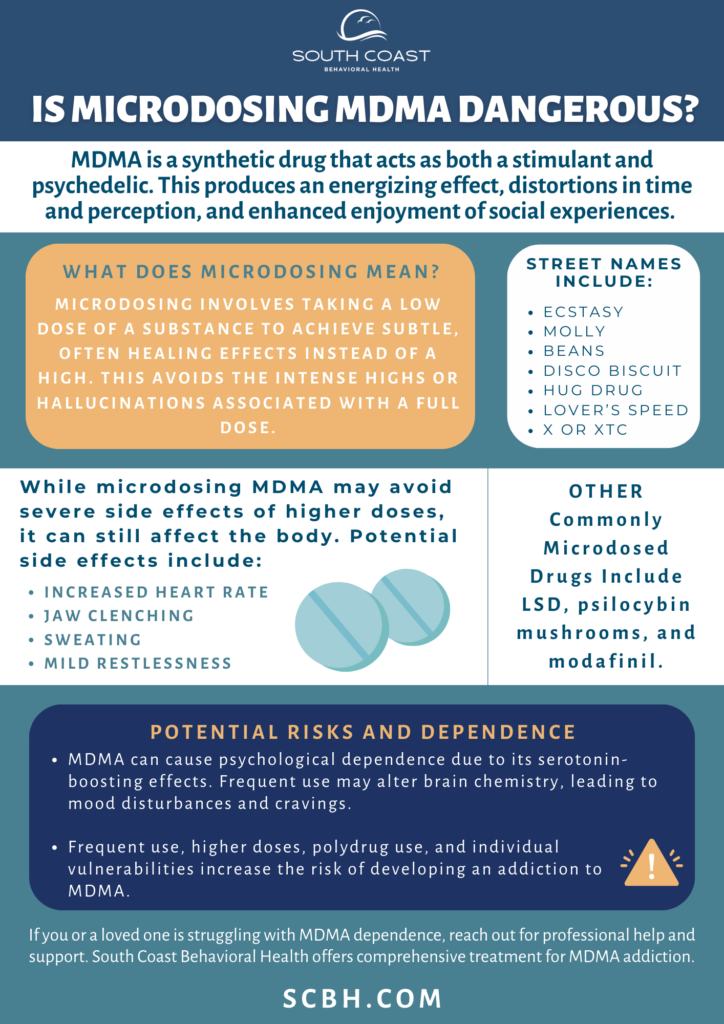
Key Takeaways:
- Microdosing MDMA isn’t risk-free: Even small amounts can still affect the brain and body, and safety depends on factors like the individual, frequency of use, and other substances involved.
- Research is very limited: There’s little scientific evidence on the effects or benefits of microdosing MDMA, so most claims are anecdotal rather than proven.
- Potential risks still exist at low doses: These may include anxiety, cardiovascular strain, serotonin depletion, and possible long-term neurological effects.
- Perceived benefits are uncertain: While some people report improved mood or sociability, these effects are not well-studied and may not outweigh the risks.
Question:
What does microdosing MDMA mean?
Answer:
Microdosing MDMA—taking very small amounts of the drug—is sometimes promoted as a way to improve mood, connection, or mental well-being. However, current evidence suggests that this practice is not well understood and may carry real risks. Research on microdosing MDMA is extremely limited, meaning most reported benefits are based on personal anecdotes rather than scientific studies. Even at low doses, MDMA can impact the brain and body, potentially causing anxiety, strain on the cardiovascular system, and changes in serotonin levels. There are also concerns about long-term effects, including possible neurotoxicity with repeated use. While some individuals believe microdosing enhances mood or sociability, these outcomes are not reliably proven and may vary widely. Overall, microdosing MDMA is not considered a safe or evidence-based approach, and individuals are encouraged to seek professional guidance for mental health or substance-related concerns.
What Is MDMA?
MDMA, short for 3,4-methylenedioxymethamphetamine, is a synthetic psychoactive drug with both stimulant and hallucinogenic effects. It is popularly known by street names such as “Ecstasy,” “Molly,” or “E.” MDMA was first synthesized in 1912, but it gained widespread popularity as a recreational drug in the 1980s and 1990s, particularly within the rave and nightclub scene. Some choose to engage in a kind of use called microdosing when users only use a small amount of the drug. Is microdosing MDMA dangerous? It depends on a number of factors.
When ingested, MDMA increases the release of several neurotransmitters in the brain, including serotonin, dopamine, and norepinephrine. This leads to feelings of euphoria, heightened senses, increased sociability, empathy, and emotional closeness with others. The drug also has stimulant effects, causing increased energy, alertness, and physical activity. For this reason, it tends to be very popular as a party drug.
MDMA is classified as a Schedule I substance in the United States, meaning it is illegal to manufacture, distribute, or possess the drug due to its high potential for abuse and lack of accepted medical use. However, some researchers have been exploring the potential therapeutic applications of MDMA for post-traumatic stress disorder (PTSD) and other mental health conditions.
What Does Microdosing Mean?
Microdosing means taking a very small fraction of a normal recreational dose – one definition has this as 1/5 to 1/20. In the context of microdosing MDMA, this would be taking anywhere from 24 to 6 milligrams, since a standard recreational dose of MDMA is around 125 milligrams.
The idea behind microdosing is to benefit from the positive effects of psychedelics like MDMA without the negative side effects. The idea started in Silicon Valley, as developers began experimenting with microdosing MDMA and other drugs as a way to boost creativity.
Microdosing MDMA and other mood-altering drugs is also argued by some to be an effective treatment for mental illness. For example, Australia recently started allowing guests with depression to microdose MDMA under the supervision of a doctor.