Reach Out Today
Recovery can't wait

How Long Does PCP Stay in Your System?

Start Your Addiction Recovery Today

Find Out How

Common Questions About Addiction Treatment

Check Out Our FAQ

Verify Your Insurance

Looking for effective treatment that’s also affordable? We accept most major insurance providers. Get a free insurance benefits check now.

Check Your Coverage​

Questions about treatment?

Get confidential help 24/7.
Reach out for more details about:
  • How we can help

  • Our location & programs

  • Insurance & payment options

Call 866-881-1184

PCP, also known as phencyclidine or “angel dust,” is a powerful hallucinogenic drug with dangerous and unpredictable effects. In this article, we’ll answer questions such as:

  • How long does PCP stay in your system?
  • Where does PCP originate from?
  • Does PCP stay in your system forever?
  • How long does PCP last?
  • How long does PCP stay in urine?
  • How long does PCP stay in your blood?

What Is PCP?

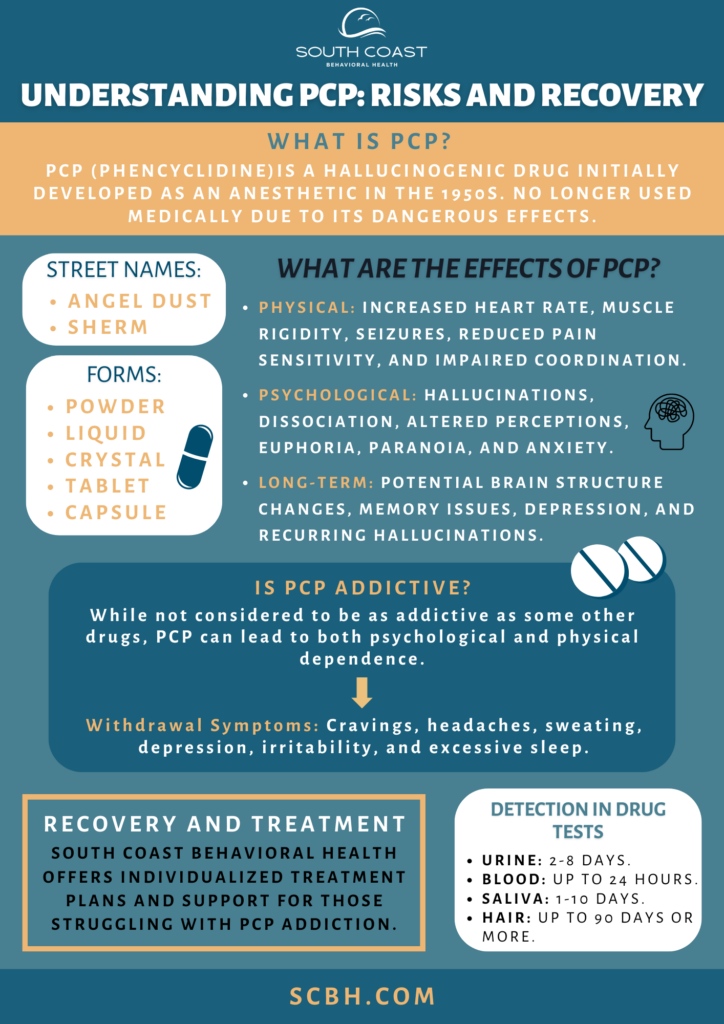
PCP stands for phencyclidine, a hallucinogenic drug that was initially developed as an anesthetic in the 1950s. Due to the high incidence of postoperative delirium in patients, it’s no longer used for any medical purposes in the United States. Instead, it’s now largely used as a recreational drug.

On the street, PCP goes by several names, primarily Angel Dust or “Sherm” (short for Sherman). As one of its nicknames implies, PCP is commonly available as a powder. However, it can also take the form of a liquid, crystal, tablet, or capsule. It’s usually smoked, snorted, or consumed orally, and is often combined with other drugs such as marijuana.

Almost 2.5% of those aged 12 and older have reported taking PCP at some point in their lives. Due to its dangerous effects and addictive nature, it’s classified as a Schedule II substance under the Controlled Substances Act, alongside methamphetamine and cocaine.

Where Does PCP Originate From?

PCP, or phencyclidine, was originally developed in the 1950s by a pharmaceutical company called Parke-Davis. It was created as an intravenous anesthetic for surgical procedures due to its pain-relieving and dissociative properties.

However, doctors quickly discovered that PCP caused severe side effects, including hallucinations, agitation, and delusions, making it unsafe for medical use in humans. By the 1960s, it was discontinued for human use and later became a drug of abuse on the streets, often sold under names like “angel dust” or “rocket fuel.”

What Are the Effects of PCP?

PCP is known for its unpredictable and potentially dangerous effects, which can vary widely based on dosage, individual sensitivity, and the context in which it is used.

PCP effects can be broken down into two categories: physical and mental.

In this article, we’ll go over negative thinking patterns, examples of negative thoughts, and how to stop spiraling into negative thinking.

Physical effects of PCP include:

  • Increased heart rate and blood pressure
  • Muscle rigidity
  • Seizures
  • Reduced or eliminated sensitivity to pain
  • Involuntary eye movements
  • Reduced coordination and balance, resulting in unsteady gait or stumbling.

Psychological effects of PCP include:

  • Visual, auditory, or tactile hallucinations
  • Dissociation: Like ketamine, PCP can cause feelings of detachment from oneself and one’s environment, as well as a sense of disconnection between thoughts, emotions, and actions.
  • Altered perceptions of time and space
  • Euphoria
  • Paranoia and anxiety

There are also long-term effects to abusing PCP.

Repeated abuse of the drug can lead to changes in brain structure, with memory and concentration issues as a result, as well as difficulty with abstract reasoning.

Chronic PCP abuse has also been linked to an increased risk of developing depression, anxiety, and other mood disorders. In some cases, people with a long history of PCP abuse have reported recurring delusions and hallucinations, even when not using the drug.

It is important to note that the effects of PCP can be unpredictable, and individuals may have very different experiences with the drug. Moreover, the combination of PCP with other substances, particularly alcohol or other drugs, can exacerbate its effects and increase the risk of dangerous or life-threatening outcomes.

How Long Does PCP Last?

The effects of a PCP high can last anywhere from 4 to 8 hours, depending on the dose and method of use. However, some users may continue to experience lingering effects—such as confusion, disorientation, or mood disturbances—for up to 24 hours or more.

Because PCP is stored in the body’s fat cells, it can also cause delayed or recurring effects even after the initial high has worn off.

How Long Does PCP Stay in Your System
Looking For Substance Abuse Treatment?

Get confidential help from our addiction treatment specialists in Orange County. Call to join our rehab program today!

Call 866-881-1184

How Long Does PCP Stay in Your System?

The half-life of PCP is generally around three days.

However, detection times can vary depending on the amount of PCP consumed, individual metabolism, and the type of test used to detect it.

Here are some rough estimates for PCP detection times in different tests:

  • PCP urine test — PCP metabolites can remain in urine up to eight days after use — however, it is apparently difficult to test for PCP in urine. Moreover, many drugs can trigger a false positive PCP urine test result.
  • PCP blood test — PCP is usually detectable in blood up to 24 hours after the last use
  • PCP saliva test — Detection time for PCP in saliva is between one to ten days
  • PCP hair test — PCP can be detected in hair for up to 90 days or more after use, as it remains in hair follicles much longer than in other body fluids

Keep in mind that these are just general estimates and can vary depending on individual factors. If you have concerns about a phencyclidine drug test, it’s always best to consult a healthcare professional for personalized advice.

Is PCP Addictive?

While not considered to be as addictive as some other drugs, PCP can still lead to dependence and withdrawal symptoms.

Those who abuse PCP may become psychologically dependent on the drug to escape from their problems or to achieve the desired effects.

While physical addiction to PCP is less common than psychological addiction, it is still possible. Long-term users may develop a tolerance to the drug, requiring higher doses to achieve the same effects. This can lead to a cycle of increasing use and dependence, which can be difficult to break.

PCP withdrawal symptoms can include:

  • Cravings for PCP
  • Headaches
  • Sweating
  • Increased appetite
  • Depression
  • Irritability
  • Excessive sleep

It’s essential to recognize that using PCP can be dangerous and have severe short-term and long-term effects on a person’s physical and mental health. If you or someone you know is struggling with addiction, it is crucial to seek treatment.

Verify Your Insurance

Looking for quality substance abuse treatment that’s also affordable? South Coast accepts most major insurance providers. Get a free insurance benefits check now.

Check Your Coverage​

Does PCP Stay in Your System Forever?

No, absolutely not. While a PCP may feel terrifying, seemingly endless while you’re in the middle of it, it will pass. And while PCP does not stay in your system forever, it can linger for a long time, especially in chronic users.

Because PCP is stored in fat cells, it’s slowly released over time, which can prolong how long it’s detectable and occasionally cause delayed effects. However, like all substances, the body eventually metabolizes and eliminates it. Depending on usage patterns, PCP can be fully cleared from the system within a few days to several weeks, but it does not remain permanently in the body.

If you find yourself struggling with a PCP high, take this as a sign that it may be time to seek treatment at a drug and alcohol rehab in California.

PCP Recovery Help

South Coast Behavioral Health is committed to our Patient’s recovery from PCP addiction. At SCBH, we are here to help you on your journey to recovery. We have a dedicated team of certified professionals who can provide individualized addiction treatment plans tailored to meet your specific needs. We also offer behavioral therapy and dual diagnosis treatment for co-occurring substance abuse and mental health disorders. 

We offer several levels of care for addiction treatment:

Our caring and compassionate staff will guide you every step of the way on your drugs and alcohol recovery journey. We ensure you have all the support and resources needed to achieve long-term sobriety. With our commitment to your success, you can be confident that we will do everything possible to help you reclaim your life from PCP addiction and lead a life of freedom and happiness. Learn more about all our addiction therapies like cognitive behavioral therapy, motivational interviewing, family therapy, dialectical behavioral therapy, and more. 

Get Started Today

If you or a loved one are thinking of getting treatment for PCP addiction, call us at 866-881-1184 or contact us here to learn more about the treatment process. Our highly qualified staff will be happy to help you verify your insurance and answer any other questions.

Worried about other addiction problems as well? We also offer opioid treatment, heroin treatment, cocaine treatment, and mental health treatment for our patients. 

Pierce Willans
Kelly McIntyre
Medically Reviewed by Kelly McIntyre, MS, LMFT
Read More About addiction Treatment & Recovery
Start Your Recovery Today at South Coast

At South Coast, our experts are dedicated to providing comprehensive information to help you make well-informed decisions for your health and happiness in recovery.

Contact us today if you are ready to begin your journey to recovery. Our team is available around the clock, so feel free to call us at any time.